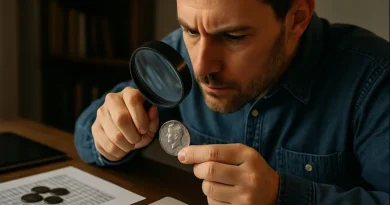
Which Australian Pennies Actually Qualify as Rare
Rarity is narrower than the Rare Australian Penny list suggests.
Actual numismatic value regarding Australian copper coins depends exclusively on mintage figures and state of preservation.
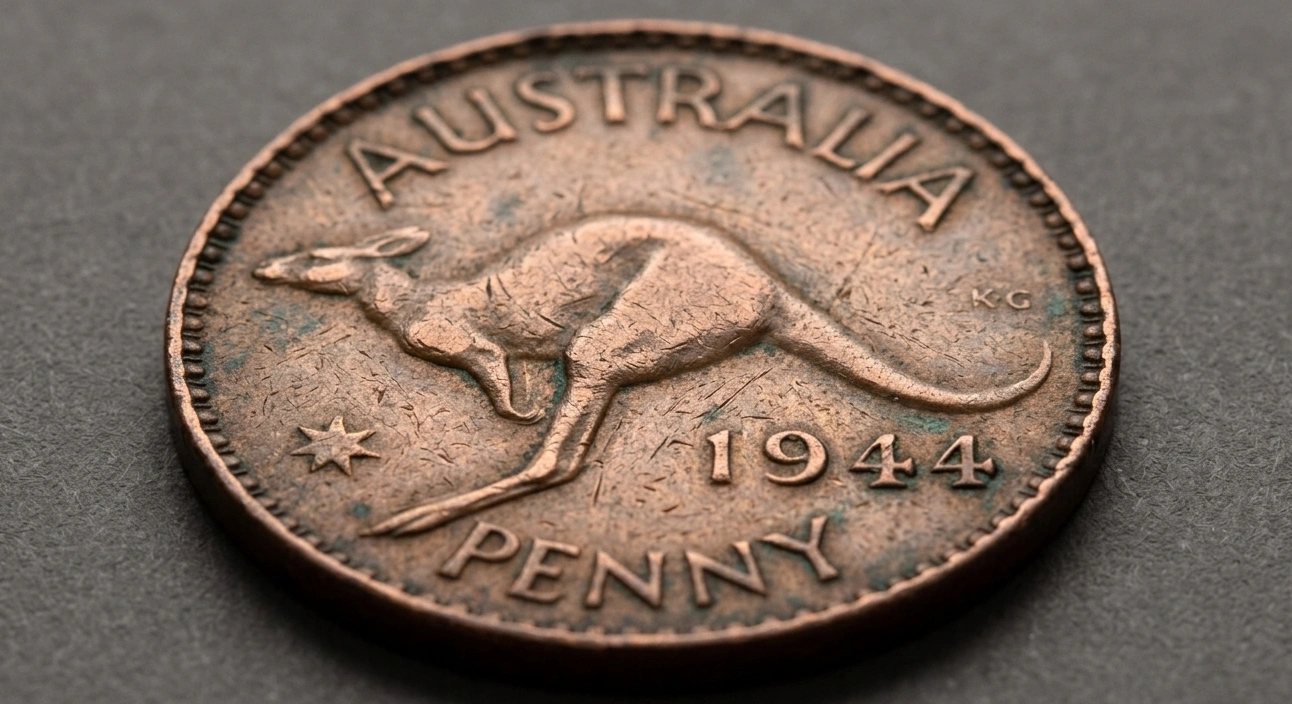
Market conditions in 2026 demonstrate strict filtration of specimens based on striking quality.
Many positions appearing rare on paper fail to qualify due to a lack of high-grade availability.
| Characteristic | Value |
| Denomination | 1 Penny |
| Metal | Copper |
| Mass | 9.45 grams |
| Shape | Round |
| Diameter | 30.8 mm |
| Edge | Plain |
Using copper as the primary material makes these coins vulnerable to oxidation.
Storage in aggressive environments results in losing original red luster.
Rare Dates and Mintage Statistics
Total mint output figures frequently fail to reflect the number of surviving specimens.
Large batches undergoing melting or government withdrawal reduced available supply.
Key dates showing minimal mintage:
- 1930 (Melbourne): ~1,500 units
- 1923 (Sydney/Melbourne): 468,000 units
- 1925 (Melbourne): 117,000 units
- 1946 (Perth): 363,000 units
Mintage volume for 1930 remains the lowest in Australian circulating history.
This specific year forms the primary investment interest in 2026.
Price Dynamics
Rare penny costs correlate with general economic health and demand for alternative assets.
Professional certification by PCGS records price increases for specimens graded MS64 and higher.
Average annual price changes: 2021 → $24,500 2022 → $26,100 (+6.5%) 2023 → $28,400 (+8.8%) 2024 → $31,500 (+10.9%) 2025 → $35,200 (+11.7%) 2026 → $39,800 (+13.1%)
Value reduction coefficients when dropping grades:
- Moving MS65 → MS64: 45% reduction
- Moving MS64 → MS63: 30% reduction
- Edge corrosion presence: 60% premium loss
Stable growth occurs only for coins avoiding cleaning processes.
Applying chemical treatments to patina nullifies numismatic surcharges.
Detailed Analysis of the 1930 Penny
This coin serves as the benchmark for rarity within the Australian region.
Accidental production at the Melbourne Mint resulted in its unintended circulation.
Record sales documented by 2026:
- Grade MS62 Brown: $520,000
- Grade AU58: $185,000
- Grade XF40: $45,000
- Grade Fine 12: $18,500
Missing records regarding 1930 mintage in official reports confirm its unplanned nature.
Experts identify authenticity by examining letter alignment in the word COMMONWEALTH with the free coin value lookup app.
Cause-and-Effect Valuation Chains
Value takes shape under the influence of several independent factors.
Interaction between these elements determines final lot status.
Logical chain for price growth: Low mintage → Circulation absence → High preservation → Certification → Auction demand
Logical chain for depreciation: Prolonged circulation → Mechanical damage → Surface film → Unprofessional cleaning → Grade loss
Original mint bloom presence remains the main condition for attaining investment status.
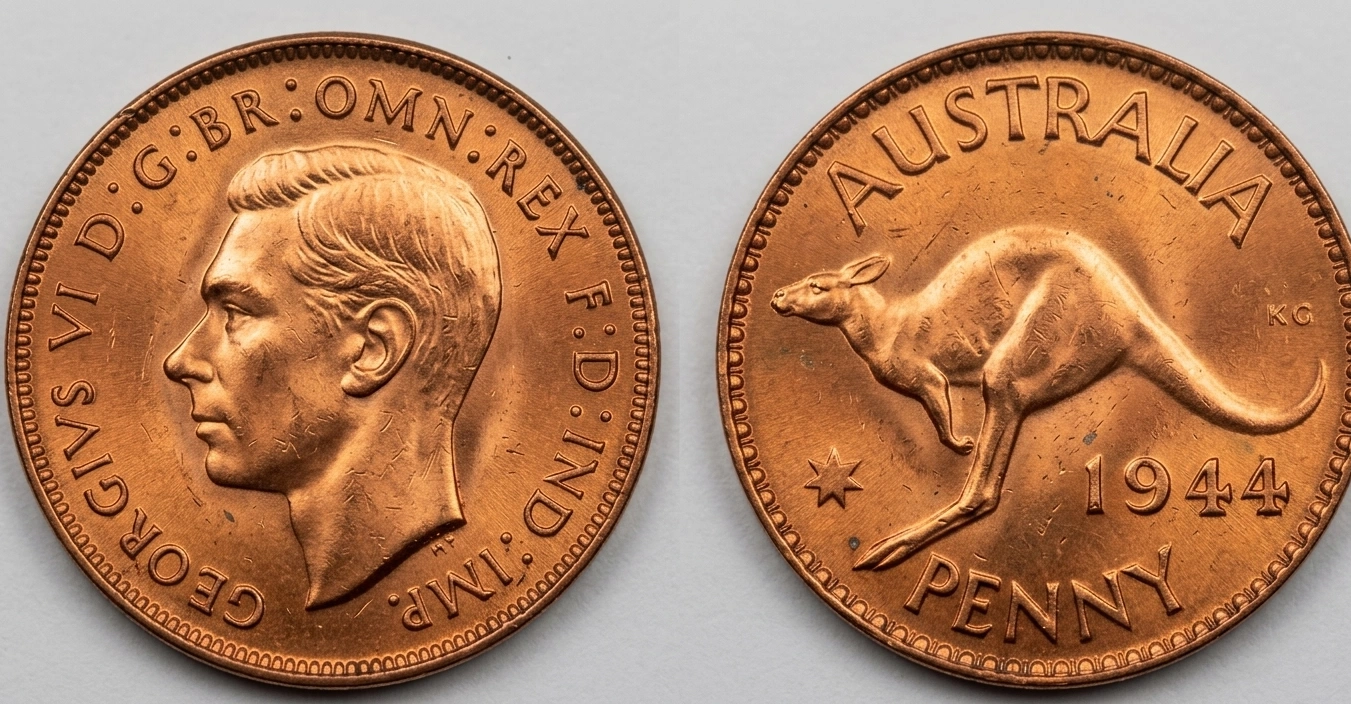
Investors ignore specimens showing flattened details on the King’s portrait.
Surface Condition
Classification by color is mandatory for copper coins.
Visual assessment divides lots into three primary groups.
Color preservation categories:
- RD (Red): over 95% original luster
- RB (Red-Brown): mixed state
- BN (Brown): total surface oxidation
Price differences between RD and BN for rare dates reach 400%.
Copper reacting with air moisture turns into a dull metal.
Technical Features of the 1923 Issue
This year ranks second in importance among collectors.
Identification difficulty stems from the existence of multiple die varieties.
Signs of an authentic 1923 rare penny:
- Clear separation between date digits
- Reverse side lacking double strikes
- Specific wear on central crown pearls
- Even rim along the entire diameter
Mintage distribution across states occurred unevenly.
Most 1923 coins possess defects from the minting press unit.
The count of surviving high-quality coins determines rarity levels.
Grading company databases allow estimating chances for finding top specimens.
| Grade | Population (1930) | Population (1925) | Rarity Level |
| VF20 | 240 | 1,100 | Low |
| XF45 | 45 | 320 | Medium |
| AU55 | 12 | 85 | High |
| MS63+ | 2 | 14 | Extreme |
Locating a 1930 coin in MS condition represents an exceptional event.
The 2026 market offers almost no such positions in open access.
Degradation and Wear Processes
Contact within transport bags creates small nicks.
These marks are termed bag marks.
Value destruction stages: Transport impact → Patina layer damage → Air reaching metal → Focal corrosion → Detail loss
Degradation processes remain irreversible without airtight capsules.
Dry storage conditions provide the only method for saving copper.
Investment Risk Factors
Investing in Australian pennies involves specific dangers, especially if they DON’T use the coin identifier app free.
The 2026 market requires thorough verification for every lot.
Main risks:
- Erroneous grading from uncertified dealers
- Artificially induced patina through chemical means
- Hidden corrosion under wax layers
- High price volatility for mid-range grades
Purchasing coins lacking detailed edge photography is unwise.
Liquidity for coins below VF grade remains at a minimum level.
Mint Marks and Price Impact
Presence or absence of mint marks determines origin.
Mark size and clarity undergo checks for manual interference.
Identification of minting centers:
- No mark → Melbourne
- Dot mark → Perth
- Double dot mark → Sydney
Perth Mint issued a limited batch in 1946.
Image centering on such coins is statistically worse than Melbourne issues.
Evaluating Mint Errors
Mint errors are classified by the degree of deviation from the standard.
Error value increases proportionally to its visual intensity.
Error evaluation criteria: Die shift → Measured in diameter percentages Axis rotation → Evaluated in degrees Die crack → Length and depth of the line considered
Cud type errors on Australian pennies occur extremely rarely.
Finding a large metal blob guarantees a price above $1,500.